
North Dakota, Minnesota, Wisconsin, and Illinois Could Face a Severe Arctic Cold Outbreak in Early January 2026 as Forecast Models Signal Dangerous Temperature Plunge
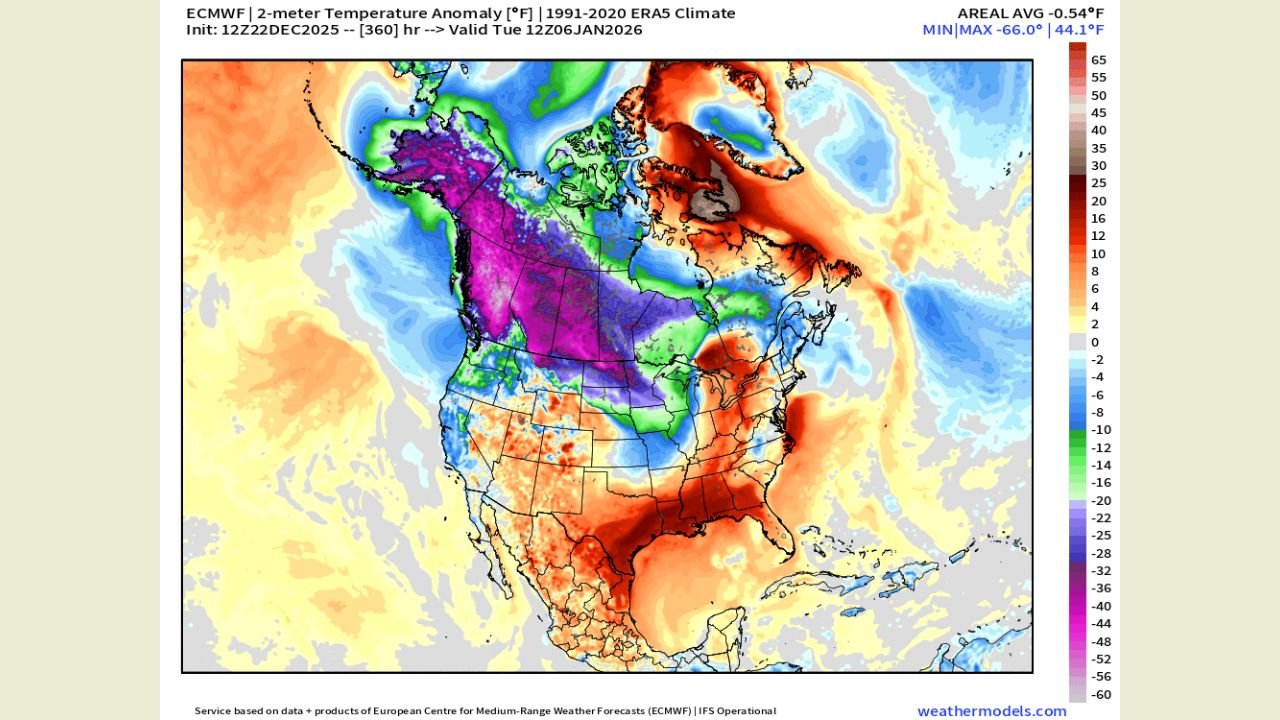
UNITED STATES — Long-range forecast models are increasingly signaling the risk of a significant Arctic cold outbreak impacting the northern United States in early January 2026, with atmospheric conditions aligning in a way that could allow extreme cold air to surge southward into the Lower 48.
While the coldest core of air develops farther north, multiple datasets show that the United States sits directly downstream of this expanding Arctic air mass, placing large portions of the country at risk for dangerous temperature drops, life-threatening wind chills, and widespread cold-related disruptions.
Arctic Air Mass Poised to Spill Into the Lower 48
Upper-level temperature forecasts show an unusually deep trough carving into North America, with bitterly cold air pressing toward the U.S. border. As this trough strengthens, the jet stream becomes displaced southward, opening a pathway for Arctic air to push into the northern United States.
Model guidance suggests that once this air mass begins advancing, it could spread rapidly across the Northern Plains, Upper Midwest, and Great Lakes, setting the stage for one of the coldest periods of the winter season.
Northern Plains and Upper Midwest Face Highest Risk
The data indicates that states such as North Dakota, South Dakota, Minnesota, Wisconsin, and northern Illinois would be among the first to feel the effects if the Arctic air is released southward.
Temperature projections show readings plunging well below seasonal averages, with overnight lows potentially falling below zero and daytime highs struggling to rise out of the teens. Wind chill values could drop to dangerous levels, especially if pressure gradients tighten behind the advancing cold front.
Cold Anomalies Could Be Extreme for Early January
Temperature anomaly maps show the northern United States trending 20 to 40 degrees colder than normal during the peak of the event. Even areas farther south, including parts of the Central Plains and Midwest, could experience sharp cold snaps if secondary surges of Arctic air develop.
Such anomalies increase the risk of frozen infrastructure, burst pipes, and hazardous travel, especially if cold arrives following existing snow or ice from late-December storm systems.
Energy Demand and Infrastructure Stress Likely
A rapid temperature drop of this magnitude would likely trigger surging energy demand across the northern U.S., placing strain on heating systems and electrical grids. Prolonged cold could also impact transportation, agriculture, and livestock, particularly in rural regions.
Forecasters note that even a partial southward push of the Arctic air mass would be sufficient to cause nationwide ripple effects, especially across energy and supply chains.
Forecast Confidence Increasing, Timing Still Uncertain
While this remains a long-range forecast, consistency across multiple model runs has increased confidence that a notable Arctic intrusion into the United States is possible during the first week of January.
Key factors to watch include the strength of the Arctic high pressure system, the orientation of the jet stream, and whether the cold air mass becomes fully mobilized toward the Lower 48.
What U.S. Residents Should Watch Next
As December comes to a close, residents in cold-prone regions should stay alert for forecast updates, particularly across the Northern Plains, Midwest, and Great Lakes. Even modest shifts in the pattern could determine whether this becomes a historic cold outbreak or a more limited but still dangerous cold snap.
For continued updates, forecast breakdowns, and national weather impacts, stay with ChicagoMusicGuide.com as meteorologists refine the early January outlook.