
Oklahoma, Arkansas, Missouri, Kentucky, Tennessee, West Virginia, Virginia, North Carolina and Maryland Face Major Winter Storm From Friday Through Monday With Heavy Snow, Damaging Ice and Power Outage Risks
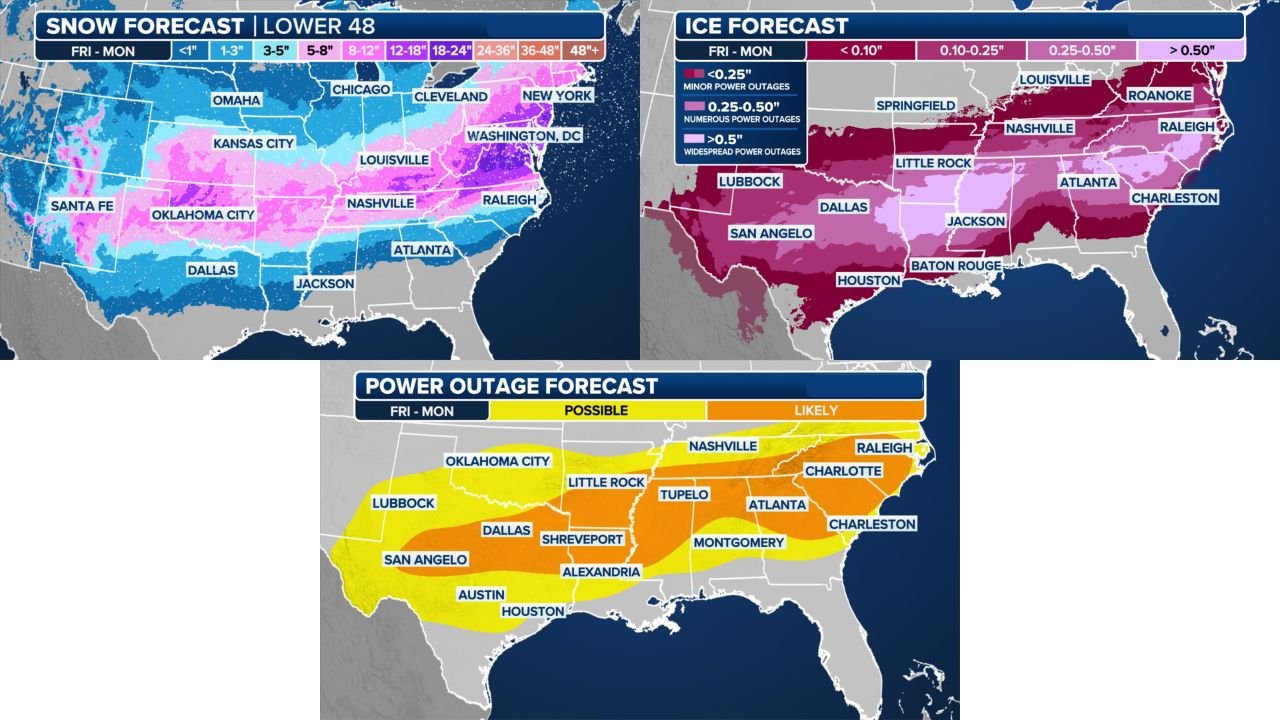
UNITED STATES — A major, high-impact winter storm is set to unfold from Friday through early next week, bringing a dangerous mix of heavy snow, crippling ice, widespread travel disruptions, and extended power outage risks across a broad swath of the central and eastern United States. Forecast guidance shows the storm impacting Oklahoma, Arkansas, Missouri, Kentucky, Tennessee, West Virginia, Virginia, North Carolina, and Maryland, with conditions deteriorating rapidly as the system strengthens and moves east.
Meteorologists describe this as a long-duration and highly disruptive winter storm, not a quick-hitting event. Snow and ice will persist for several days in many locations, followed immediately by a surge of dangerous Arctic cold, worsening impacts and slowing recovery efforts.
Storm Timeline and Overall Setup
Forecast data indicates winter weather developing across the Southern Plains late Friday before expanding eastward through the weekend and into early next week.
Snowfall will intensify from central Oklahoma and Missouri eastward through Kentucky, West Virginia, Virginia, and into the Mid-Atlantic, while a significant ice zone sets up farther south, especially across Arkansas, Tennessee, and North Carolina.
The storm is expected to linger longer than typical systems, increasing the likelihood of road closures, flight cancellations, utility failures, and hazardous travel conditions well into Monday.
Heavy Snow Threat Across the Central and Appalachian Corridor
Snowfall probability maps show a high confidence zone for at least moderate to heavy snow stretching from parts of Oklahoma and Missouri through Kentucky, West Virginia, Virginia, and Maryland.
Many communities within this corridor could see several inches of accumulation, with localized totals becoming substantial where snow bands persist.
Snow-covered roads, reduced visibility, and rapidly changing conditions will make travel increasingly dangerous, especially across mountainous terrain in West Virginia and western Virginia, where snowfall rates may be intense for extended periods.
Dangerous Ice Zone Raises Power Outage Concerns
South of the primary snow band, forecast models show a significant freezing rain and sleet threat, particularly across Arkansas, Tennessee, North Carolina, and parts of Kentucky and Virginia.
Ice accumulation in this zone is projected to be strong enough to damage trees and power lines, increasing the risk for widespread power outages, especially where ice persists for multiple days.
The ice threat is considered especially dangerous because it will be followed by plunging temperatures, preventing melting and complicating restoration efforts.
Power Outage Risk Grows as Ice and Wind Combine
Power outage forecast maps highlight a likely outage corridor stretching from Oklahoma through Arkansas, Tennessee, and into the Carolinas, with possible outages extending northward where ice and wind overlap.
Utilities may struggle to keep pace if ice accumulation reaches the higher end of projections, particularly in rural and forested areas where falling trees could block access.
Residents are urged to prepare for extended outages, not short disruptions, especially in regions forecast to receive moderate to severe ice accumulation.
Arctic Cold to Follow, Prolonging Impacts
Once the storm system exits, dangerous Arctic air will surge into the affected states, locking in snow and ice and causing bitterly cold wind chills.
This post-storm cold will slow snowmelt, keep roads icy for days, and increase risks related to exposed pipes, heating failures, and cold-related health issues.
Officials stress that this storm should be treated as a multi-phase event, with impacts continuing well after precipitation ends.
Why This Storm Is Not One to Ignore
Forecasters emphasize that while the overall forecast track remains consistent, the severity and duration make this storm particularly dangerous.
Even small shifts in temperature profiles could dramatically change outcomes, turning snow into ice or increasing accumulation totals. That uncertainty adds to the risk, not lessens it.
This is not a storm to monitor casually. Preparations should be completed before the weekend, including securing supplies, limiting unnecessary travel, and planning for potential power disruptions.
Stay with ChicagoMusicGuide.com for continued updates as this major winter storm evolves and impacts expand across the central and eastern United States.