Missouri Sees Historic 60-Degree Temperature Crash as Rare “Blue Norther” Slams St. Louis With Snow and Arctic Cold

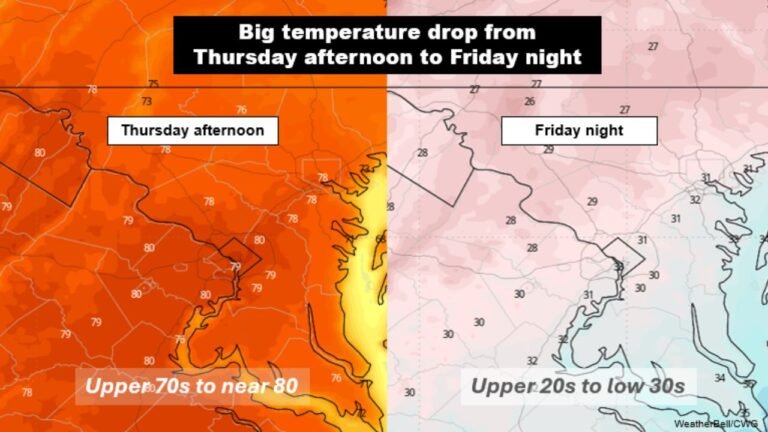
Missouri — A rare and extreme “blue norther” cold front swept through Missouri, delivering one of the most dramatic temperature collapses the state has seen in decades and sending St. Louis from near-record warmth to snow and near-freezing conditions in just hours. The data shows temperature drops of 50 to 60 degrees within a single day, placing this event among the most intense rapid cool-downs ever documented in the region.
St. Louis Records One of Its Sharpest Temperature Drops on Record
In St. Louis, temperatures plunged from 78.1 degrees at 2 p.m. Sunday to 19 degrees with light snow by 3 a.m., a staggering 62-degree drop in roughly 13 hours. This rapid collapse may represent the largest 13-hour temperature drop ever recorded at the St. Louis airport, tying it as the second most intense blue norther observed in local aviation records.
Historical comparisons show how rare this event truly is. On January 24, 1943, St. Louis fell from 63 degrees at noon to 6 degrees the next morning, a 63-degree drop. A similar event on January 24, 1972, saw temperatures crash from 70 degrees to 8 degrees, a 62-degree fall. This week’s event now joins those historic extremes.
Statewide Missouri Communities Experience 60-Degree Collapses
The temperature plunge was not isolated to St. Louis. Across central and southern Missouri, multiple locations recorded near-identical drops:
- Anthony, Missouri fell from 73.2 degrees to 19.4 degrees
- Kaiser Lake Ozark plunged from 74 degrees to 13 degrees
- Jefferson City dropped from 73.9 degrees to 14 degrees
Each location experienced a near-60-degree temperature crash, underscoring the statewide impact of this arctic front rather than a localized anomaly.
What Is a Blue Norther and Why This One Was So Intense
A blue norther is a nickname for a powerful cold front that arrives suddenly with violent temperature drops, strong winds, and rapid weather changes, often catching communities off guard. This particular event was fueled by arctic air surging southward behind a deep low-pressure system, allowing cold air to overwhelm warm conditions in a matter of hours.
The combination of extreme wind shift, plunging temperatures, and snow development makes this one of the most intense blue northers Missouri has seen in generations.
Why These Arctic Drops Are Raising Long-Term Concerns
Meteorologists note that arctic cold fronts appear increasingly volatile, with sharper contrasts between warm and cold air masses. The data suggests that while warm spells can reach record levels, the transition to cold is becoming more abrupt, increasing risks for infrastructure stress, travel hazards, and public safety.
For residents, events like this reinforce the importance of rapid weather preparedness, especially during winter months when conditions can shift dramatically in just a few hours.
For more detailed weather analysis, regional impact stories, and ongoing updates as extreme patterns continue to unfold, visit ChicagoMusicGuide.com for the latest coverage.