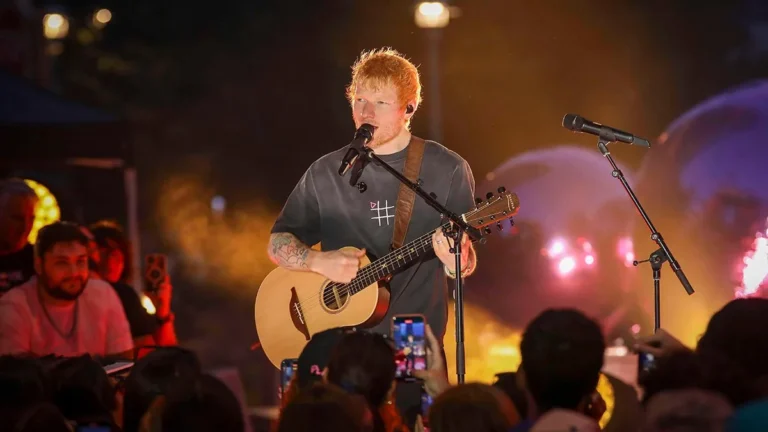
Ed Sheeran Opens Philadelphia Solo Concert With Gaza Remarks as Fan Backlash and Dropped Openers Reshape His Loop Tour Stop at Lincoln Financial Field
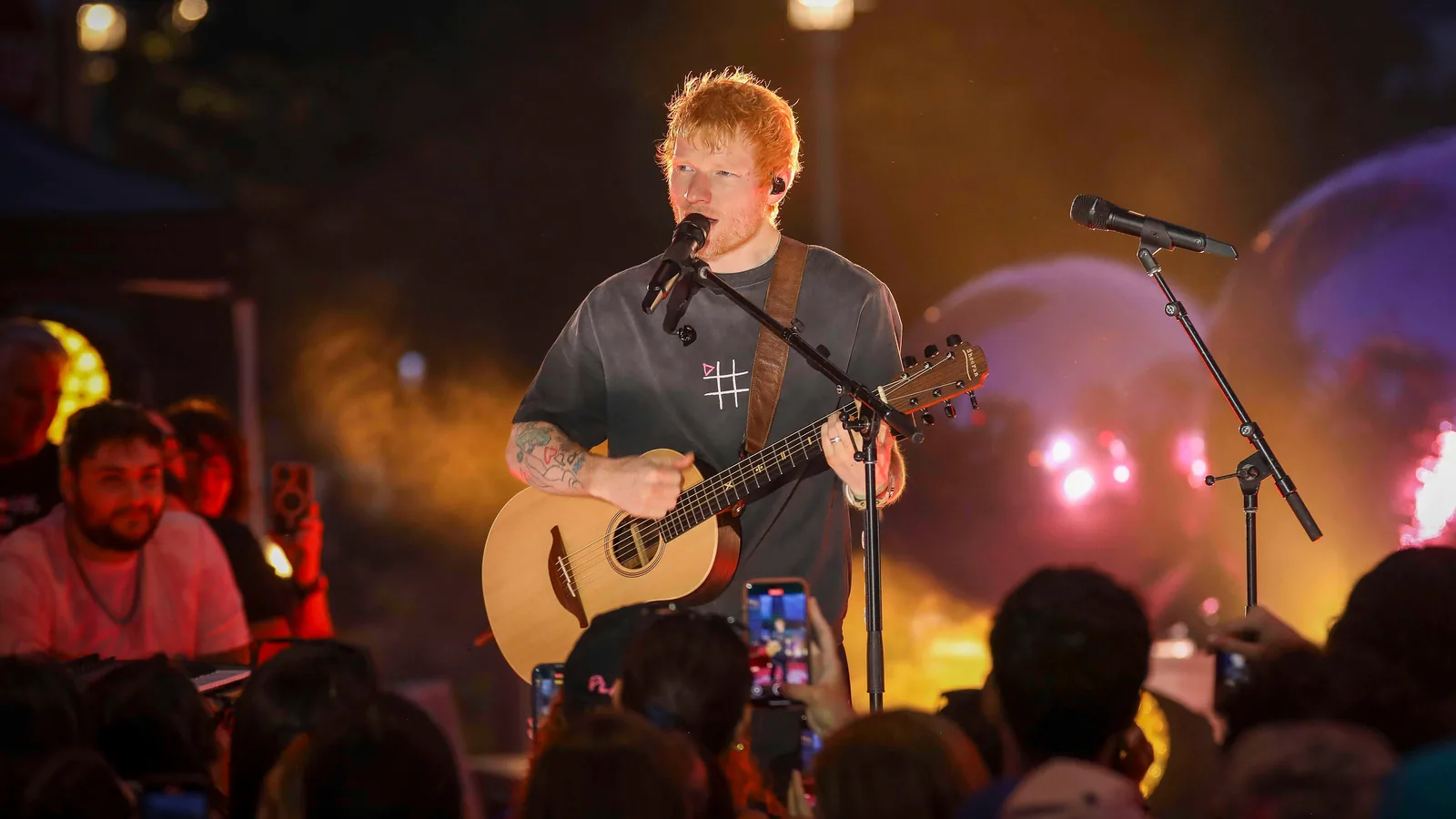
PHILADELPHIA, PA — Ed Sheeran opened his Philadelphia concert on Saturday night by addressing the war in Gaza, calling the situation “catastrophic and unjustifiable.” Speaking to the crowd at Lincoln Financial Field, he said his heart had been broken by the scale of civilian suffering and the deaths of children.
The comments came as his Loop Tour continued through a turbulent stretch shaped by lineup changes and protest. Sheeran said he wants his shows to be centered on unity and humanity rather than politics, even as debate around his decisions followed him into the stadium.
A week of upheaval around the Loop Tour
The Philadelphia stop landed after several days of escalating controversy around Sheeran’s tour. Macklemore, who had been set as Sheeran’s original U.S. opener, was dropped after making pro-Palestinian comments onstage during a Sept. 5 show in New Jersey.
Sheeran has said he was not responsible for that decision, which he said came at the urging of New England Patriots owner Robert Kraft. Kraft’s company owns the stadium where Sheeran had been scheduled to play in another city on Friday, adding another layer to a dispute that had already spread well beyond the stage.
Within hours of Sheeran’s statement on Tuesday, the supporting acts tied to the tour began withdrawing, leaving the concert’s lineup in flux as the Philadelphia date approached.
How the openers kept changing
Sheeran has played much of the Loop Tour without a full support lineup, though the Irish folk band Beoga has joined him for several songs at each stop. That made the Philadelphia show feel different from a standard multi-act arena night, with the focus squarely on Sheeran’s solo set.
Macklemore was first replaced by Danish band Lukas Graham and Irish singer Aaron Rowe, but both later backed out in solidarity with the earlier controversy. Finneas, Billie Eilish’s brother and frequent collaborator, had also been due to join Sheeran in South America later this year before dropping out earlier in the week.
Sheeran’s website did not list replacement acts as of Saturday afternoon, leaving fans to arrive without a clear picture of who, if anyone, would share the stage.
Protesters gathered outside Lincoln Financial Field
Before the concert began, about 50 pro-Palestinian demonstrators собраged outside the stadium. Their presence underscored how quickly a tour stop had become a flashpoint for broader arguments over music, activism and public responsibility.
One attendee, Hillary Steinberg, 34, of Philadelphia, said she had bought tickets a year earlier but got a refund and chose to attend the demonstration instead. She said she was disappointed that Sheeran did not take a public stand.
Steinberg said she believed art and music are political by nature, and she described Sheeran’s refusal to engage as itself a political choice. Her comments captured the divide around the concert, where some fans came for escape and others came expecting a message.
Fans in the crowd saw the issue differently
Not everyone outside or inside the venue agreed that a concert should become a political forum. Diane Savitz, 53, of Stroudsburg, said she had bought tickets months earlier and remains a big Sheeran fan.
Savitz said she did not think Sheeran had done anything wrong and argued that concerts should be places where people can enjoy the music. She said music should bring people together, while still allowing room for free speech in other settings.
That split reflected the broader mood around the show: one side frustrated that Sheeran would not take a stronger public position, another insisting that fans came for the performance and not a debate about the war in Gaza.
Donations, touring power and what comes next
The financial side of the dispute also remained unsettled. Macklemore said Wednesday that he would donate $1 million to Palestinian relief efforts and urged Kraft to match the gift. A spokesperson for Kraft later said the billionaire and Sheeran had each agreed to donate $2 million, though no recipient was specified.
Sheeran’s representatives did not respond to multiple requests for comment. He has said the tour promoter was ultimately responsible for the decision to drop Macklemore, and he maintained in a Tuesday statement that he did not want to be pulled into discussions about the war during his concerts.
Pollstar said in May that the Loop Tour was the highest-grossing tour in the world, with average box office gross topping $7 million per city. Through the end of 2025, Sheeran was ranked the No. 3 top-earning concert act since 2021, a reminder of how much influence his touring operation carries even when a show turns contentious.
A megastar show shadowed by a global conflict
Sheeran told fans he had spoken with venues throughout the week in an effort to “build a bridge” before Macklemore was dropped. He also said he would never willingly let down his fans or the touring crew and others who depend on the road for work.
That language framed the Philadelphia concert as more than a routine stop on a blockbuster tour. It became a test of how an artist with a massive audience handles pressure from promoters, venues, protest groups and fans who want either silence or a statement.
For the people inside Lincoln Financial Field, the music still went on. But the arguments surrounding the show made clear that, for Sheeran and many in the crowd, the night was about far more than a set list.
Chicago's music scene, one story at a time — Chicago Music Guide.