
Ohio, Indiana, Michigan, and Kentucky Could Face a Broad Winter Storm Window Around January 18–19 as Ensemble Signals Turn More Active
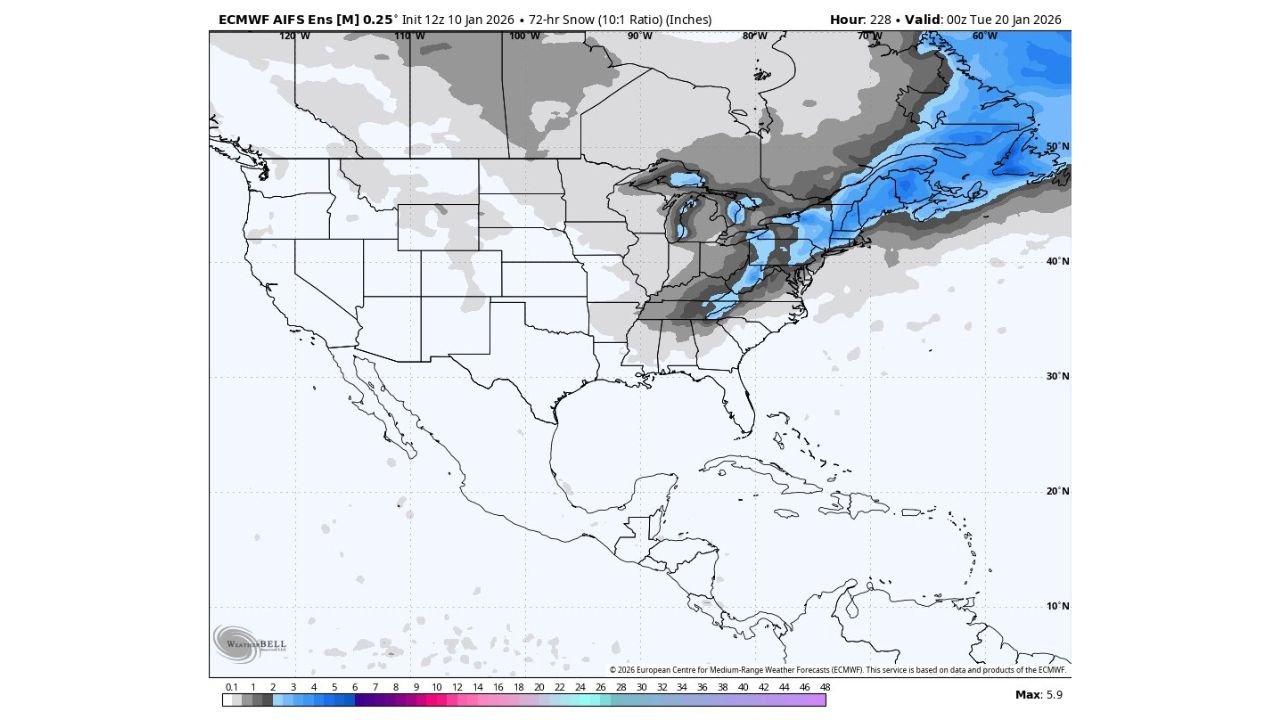
UNITED STATES — After a relatively quiet start to January, long-range ensemble guidance is increasingly pointing toward a more active winter pattern developing across the Ohio Valley and parts of the Great Lakes, with Ohio, Indiana, Michigan, and Kentucky emerging as key areas to watch around January 18–19.
While this timeframe remains more than a week out, model consistency has improved, suggesting at least one storm system — and possibly multiple waves — could interact with colder air settling into the central and eastern United States.
What the Pattern Shift Indicates
Recent ensemble trends show a strengthening Arctic influence pressing southward, while storm energy tracks out of the Plains and Midwest. This combination often favors widespread winter precipitation, particularly when systems pass through the Ohio Valley before lifting northeast.
Forecasters stress that this is a pattern-based signal, not a locked-in storm forecast. However, the persistence of the signal across multiple days increases confidence that the region will see some form of winter weather risk during this period.
States Now Emerging as the Core Zone
The latest guidance highlights a westward shift in the area of concern, placing emphasis on:
- Ohio, including central and southern sections
- Indiana, especially central and northern counties
- Michigan, with interior and southern regions most favored
- Kentucky, particularly northern and eastern portions
These states sit near the transition zone between colder air to the north and milder air to the south, which is often where snow, sleet, or mixed precipitation setups evolve.
Why Snow Maps Should Not Be Taken Literally Yet
Ensemble snow output at this range is not meant to show exact totals or final impact zones. Instead, it highlights where storm energy repeatedly appears across many model runs.
Small changes in:
- Storm track
- Timing of cold air
- Strength of individual systems
could significantly alter outcomes, including whether precipitation falls as snow, rain, or a mix.
Potential for Multiple Systems
Rather than one single storm, guidance suggests a more progressive pattern, where several disturbances may move through the region in succession. Even if one system misses a specific area, others could follow shortly after, keeping winter weather chances elevated.
This type of setup often marks the beginning of a more active mid-to-late January stretch, especially across the Ohio Valley and lower Great Lakes.
What to Watch Going Forward
Over the coming days, forecasters will be watching for:
- Better agreement on storm tracks
- Clearer temperature profiles
- Refinement of snow vs. rain zones
Until then, residents in Ohio, Indiana, Michigan, and Kentucky should view this as an early heads-up, not a final forecast.
As this evolving winter pattern becomes clearer, ChicagoMusicGuide.com will continue breaking down what the data actually shows — without hype — so you can stay informed as January unfolds.